


Did you know? One nanometer equals 10⁻⁹ meters—just one ten-thousandth the diameter of a human hair. The core chips in the smartphones, computers, and 5G devices we use every day harbor a “nanoscale world” even smaller than one ten-thousandth of a hair’s diameter: the realm of advanced-node semiconductors. Within these chips, insulating layers, barrier layers, and conductive films must all be “grown” with nanometer-level precision—this is precisely where high-power impulse magnetron sputtering (HiPIMS) coating technology comes into play.
2026/05/09

“The Coating Black Technology” Hidden in Medical Imaging
When it comes to medical imaging, most people are familiar with procedures such as CT and PET-CT scans. During operation, the performance of these devices—particularly the clarity and sensitivity of the resulting images—is largely determined by a nanoscale precision thin film coating applied to their core components. This coating, in turn, relies on an unsung “coating black technology”: magnetron sputtering.
2026/04/04

Principles, Classification, and Applications of Physical Vapor Deposition (PVD) Technology
Physical Vapor Deposition (PVD) is an advanced surface engineering technology that, under vacuum conditions, uses physical methods to convert a target material into gaseous atoms, molecules, or ions, which then deposit onto the substrate surface to form a thin film. Since its development in the early 20th century, PVD technology has become a crucial technique in modern additive manufacturing and functional coating applications, owing to its advantages such as environmental friendliness, controllable costs, minimal consumable usage, dense and uniform film properties, and strong adhesion between the film and substrate. PVD enables the on-demand preparation of functional films with properties including wear resistance, corrosion resistance, conductivity, insulation, piezoelectricity, and magnetism, and is widely used across various industries, including mechanical, electronic, construction, and medical sectors.
2026/01/13

Recently, TGV (Through Glass Via) technology has made significant strides in the fields of materials processing and micro- and nano-manufacturing, drawing considerable attention from the semiconductor, advanced packaging, and emerging electronic device industries. With its outstanding electrical performance, high-frequency characteristics, and three-dimensional integration capabilities, TGV is emerging as one of the key technologies for next-generation high-density interconnects.
2026/01/05

Thin film deposition equipment
Thin film deposition equipment classification Thin film deposition refers to the deposition of thin film materials to be processed on substrates such as silicon wafers. The deposited thin film materials are mainly non-metals such as silicon dioxide, silicon nitride, and polysilicon, as well as metals such as copper. The deposited films can be amorphous, polycrystalline, or single crystal.
2025/04/30

Semiconductor manufacturing and advanced packaging continue to heat up
Thanks to strong policy support, cyclical changes in the industry, innovation-driven growth, and the accelerated advancement of domestic substitution, the localization rate has significantly improved across multiple segments, from IC design to wafer manufacturing, packaging testing, and equipment materials. This marks a steady progress of China's semiconductor industry towards self-control.
2025/02/27
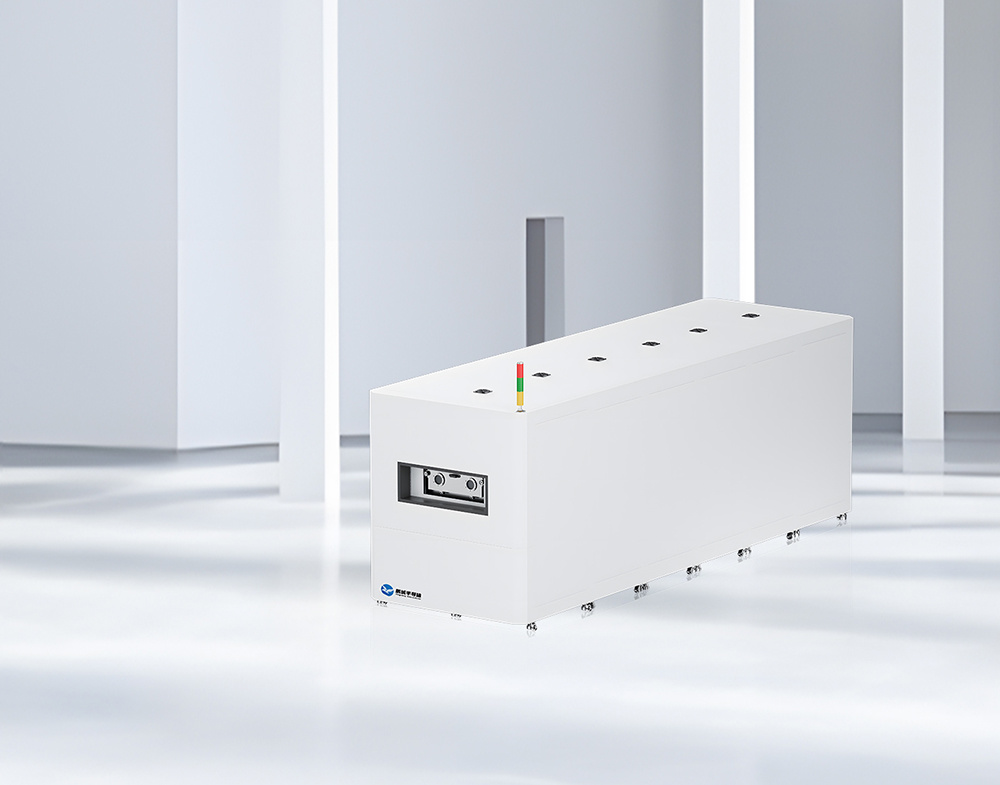
Pengcheng's semiconductor glass substrate TGV technology supports advanced packaging.
In the field of advanced packaging, both interposers in 2.5D packaging and TSVs in 3D packaging are essential. Recently, many people have heard the term Through Glass Via (TGV). The potential of TGV is immense, and it may become a common feature in advanced packaging technology in the future. This article will briefly describe the applications and development trends of Through Glass Via (TGV) in advanced packaging, as well as an overview of the process.
2025/02/17

Principle of Vacuum Coating Machine Equipment
The vacuum coating machine is an advanced surface treatment technology device that can form one or more layers of thin films on the surface of various materials, imparting new properties to the substrate, such as improved wear resistance, corrosion resistance, and optical performance. The working principle of the vacuum coating machine is mainly based on physical vapor deposition (PVD) technology, involving various physical processes such as vacuum technology, thermal evaporation, and sputtering.
2024/11/28

Features and functional advantages of plasma coating instrument
Plasma coating instrument is a kind of surface treatment equipment, which has a wide range of applications and important functional advantages. It is mainly used for surface coating and modification treatment. By exposing the material to a plasma environment, the modification and coating of the material surface can be achieved by utilizing the mechanisms of ion bombardment and reactive deposition. This technology has a wide range of applications in various industries, such as electronics, optoelectronics, medical, automotive and other fields.
2024/08/12
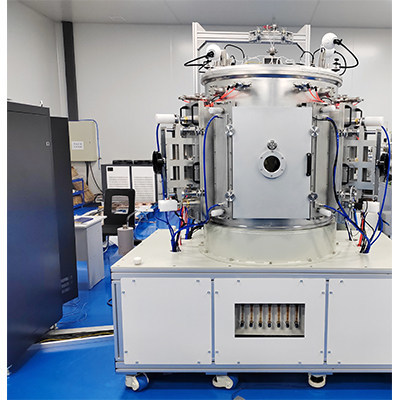
The use of magnetron sputtering coating instrument and matters needing attention
Magnetron sputtering coating instrument (PVD coating equipment) is a common surface coating equipment. It is a technology that uses evaporation or sputtering to deposit thin films on the surface of a substrate under vacuum conditions to prepare metals, alloys, compounds, semiconductors, ceramics, dielectric composite films and other chemical reaction films. It is suitable for plating various single-layer films, multi-layer films, doped films and alloy films, and can be used for plating magnetic materials and non-magnetic materials. Widely used in electronics, optoelectronics, optics, medical and other industries. In order to ensure its normal use and obtain a good coating effect, the following are some details and techniques that need to be paid attention to when using the magnetron sputtering coating instrument.
2024/07/29

Contact: Miss Dai
Address: 1704, Building 1, Chongwen Park, Nanshan Zhiyuan, 3370 Liuxian Avenue, Nanshan District, Shenzhen City, Guangdong Province
Shenyang Office Address: Shenyang University Science Park, No.15 Wanghua South Street, Dadong District, Shenyang City, Liaoning Province
Telephone:13632750017
E-mail:sales@hitsemi.com

Message