

Features and functional advantages of plasma coating instrument


Release time:

2024-08-12

Plasma coating instrument is a kind of surface treatment equipment, which has a wide range of applications and important functional advantages. It is mainly used for surface coating and modification treatment. By exposing the material to a plasma environment, the modification and coating of the material surface can be achieved by utilizing the mechanisms of ion bombardment and reactive deposition. This technology has a wide range of applications in various industries, such as electronics, optoelectronics, medical, automotive and other fields.
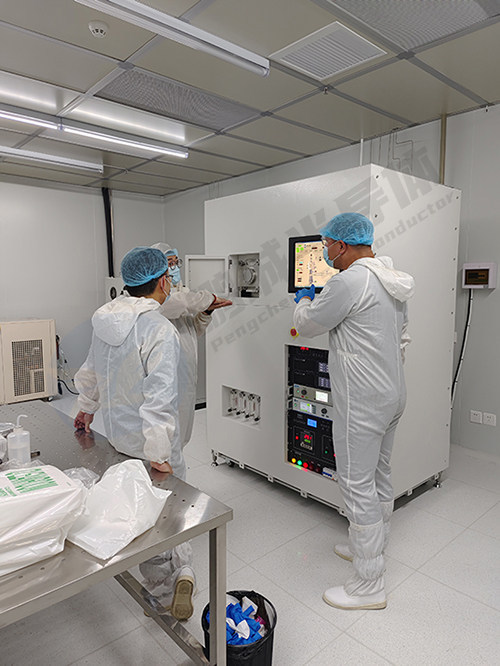
Plasma coating instrument is a kind of surface treatment equipment, which has a wide range of applications and important functional advantages. It is mainly used for surface coating and modification treatment. By exposing the material to a plasma environment, the modification and coating of the material surface can be achieved by utilizing the mechanisms of ion bombardment and reactive deposition. This technology has a wide range of applications in various industries, such as electronics, optoelectronics, medical, automotive and other fields.

Secondly, the plasma coating instrument has superior functional advantages. It can improve the performance of the material surface. By controlling the ion energy and flow rate in the plasma, the hardness, wear resistance and corrosion resistance of the material can be enhanced, thereby improving the service life and performance stability of the material. Nanoscale coating of the material surface can be achieved. By adjusting the composition of the reaction gas and the deposition conditions, a uniform and dense coating can be formed on the surface of the material, which has excellent optical, electrical and thermal properties. The surface composition of the material can also be adjusted. For example, in the field of optoelectronics, the performance of the semiconductor device can be adjusted by depositing a doped layer.
In addition, the plasma coating instrument also has the characteristics of high efficiency and environmental protection. Compared with the traditional coating technology, the plasma coating instrument can be used to treat the surface of the material at a lower temperature, reducing energy consumption and heat loss. At the same time, the technology does not require the use of harmful solvents and chemicals and is environmentally friendly.
Equipment Manufacturer-Pengcheng Semiconductor Technology (Shenzhen) Co., Ltd
Disclaimer:
Part of this article is reproduced from the Internet, and its copyright and responsibility belong to the original author. If you are the original author and do not want to be reproduced, please contact us (sales@hitsemi.com).


News Center

Pengcheng Semiconductor Leads the Future: Explosive Growth of TGV and TSV Technologies on the Horizon

With the rapid development of the semiconductor industry, especially in the field of chip interconnect technologies, through-glass vias (TGV) technology is increasingly becoming a key driver of growth. In the near future, this technology is expected to usher in unprecedented growth opportunities in both the global and Chinese markets. According to the latest market research data, China has already become the world’s largest market for TGV technology applications.

Application of Magnetron Sputtering Technology in the Preparation of Core Thin Films for Key Components in Medical Imaging

In the ongoing evolution of modern medical imaging technology, magnetron sputtering has become a core process in the field of thin-film fabrication and is widely used in the manufacturing of critical components for medical imaging.

Pengcheng Semiconductor Achieves a New Breakthrough in Magnetron Sputtering Technology, Boosting the Localization of High-End Vacuum Coating Equipment.

Shenzhen—Pengcheng Semiconductor Technology (Shenzhen) Co., Ltd. (hereinafter referred to as "Pengcheng Semiconductor"), which has been deeply engaged in the fields of advanced semiconductor packaging and micro- and nano-manufacturing, recently announced a significant technological breakthrough in its independently developed high-vacuum magnetron sputtering coating equipment. The equipment has successfully achieved high-density via plating with a depth-to-diameter ratio exceeding 10:1 in TGV (Through Glass Via) coating processes, injecting new momentum into the development of domestically produced vacuum coating equipment in the field of three-dimensional integration.

Principles, Classification, and Applications of Physical Vapor Deposition (PVD) Technology

Physical Vapor Deposition (PVD) is an advanced surface engineering technology that, under vacuum conditions, uses physical methods to convert a target material into gaseous atoms, molecules, or ions, which then deposit onto the substrate surface to form a thin film. Since its development in the early 20th century, PVD technology has become a crucial technique in modern additive manufacturing and functional coating applications, owing to its advantages such as environmental friendliness, controllable costs, minimal consumable usage, dense and uniform film properties, and strong adhesion between the film and substrate. PVD enables the on-demand preparation of functional films with properties including wear resistance, corrosion resistance, conductivity, insulation, piezoelectricity, and magnetism, and is widely used across various industries, including mechanical, electronic, construction, and medical sectors.

The TGV glass through-hole technology has achieved a significant breakthrough, and its application prospects continue to expand.

Recently, TGV (Through Glass Via) technology has made significant strides in the fields of materials processing and micro- and nano-manufacturing, drawing considerable attention from the semiconductor, advanced packaging, and emerging electronic device industries. With its outstanding electrical performance, high-frequency characteristics, and three-dimensional integration capabilities, TGV is emerging as one of the key technologies for next-generation high-density interconnects.